The kitchen is the heart of the home, a place where daily meals and shared moments at the table are born. However, dry goods such as flour, groats, pasta, or spices unfortunately bring chaos into it. You open a cabinet and instead of order you see spilled rice, scattered sugar, or packs of pasta lying around? Anyone who has ever faced such a view knows how frustrating daily cooking can be in a disorganized space. Good cabinet organization is more than just aesthetics; it's genuine convenience during meal preparation, longer freshness of products, and a lower risk of food waste. In this guide, we'll show you step by step how to master the chaos in the kitchen using appropriate storage containers. You'll learn which organizers work best in various places and how to create an orderly, functional, and safe space where cooking becomes a real pleasure.
Bulk products like flour, grains, pasta or spices, although seemingly easy to store, can quickly create chaos in the kitchen. Even minor oversight in securing supplies can lead to flour clumping, loss of spice aroma, and in the worst case, the appearance of unwanted pests. Proper containers and systematic storage are not only a matter of aesthetics but, above all, hygiene, convenience, and longer product freshness.
Airtight containers are the only way to avoid unwelcome guests. Bulk products are often brought home in paper or plastic packages that do not protect against insects. Even small holes in the carton can lead to the quick appearance of pantry moths. High-quality containers provide safe, airtight storage, which helps protect supplies for many months.
Bulk products absorb moisture from the air and cooking instantly. Flour clumps, grains harden, and spices lose their aroma. Glass or high-quality materials prevent moisture and maintain the natural structure and taste of products, making meal preparation predictable and enjoyable.
Organized cabinets and uniform containers are not only visual order. Studies show that an organized environment reduces stress levels and improves concentration while cooking. Containers are not only functional but with an aesthetic design add harmony and elegance to the interior.
It's not enough to just transfer bulk products to containers; smart placement in the kitchen is also crucial. The right place for each ingredient facilitates cooking, shortens search time and keeps cabinets organized. It's worth following the principle of accessibility and functionality: products we use most often should be within reach, and those we use less frequently can be stored in deeper drawers or cabinets. This way, every meal is prepared efficiently, and the kitchen is both practical and aesthetic. Below we present how to make the best use of different spaces in the kitchen:
Products we use most often or that can serve as decorative elements (e.g., colorful muesli or spaghetti pasta) are best kept on upper shelves or countertops. This keeps them always at hand and simultaneously displayed attractively.
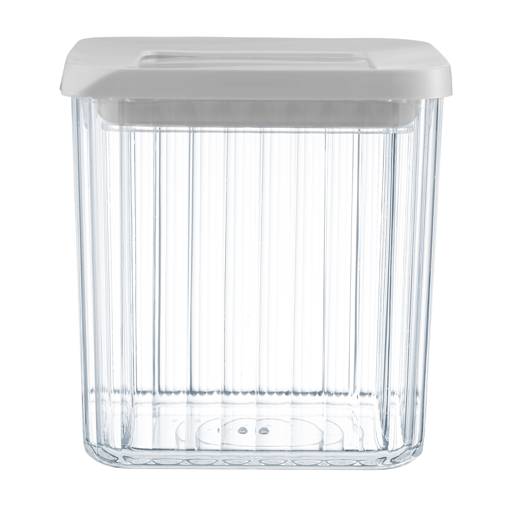
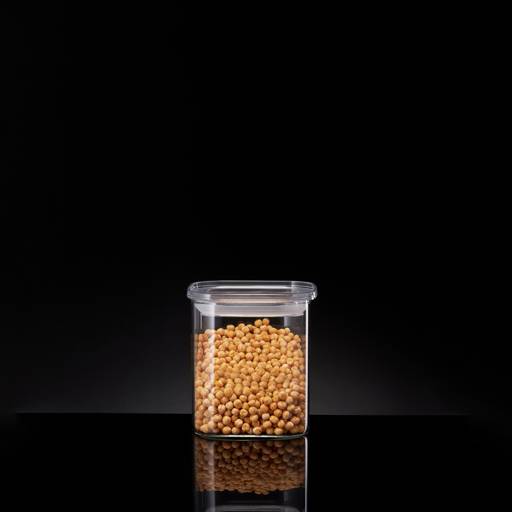
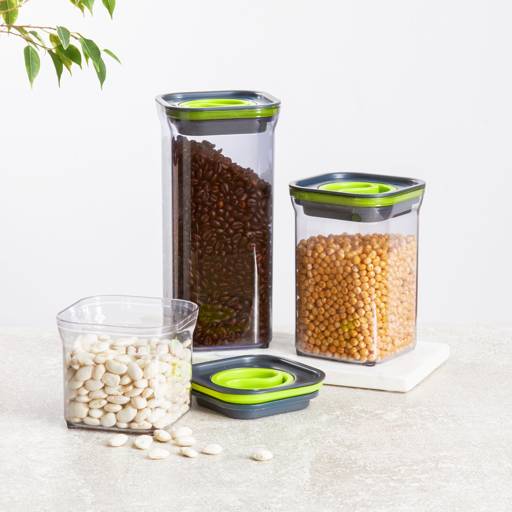
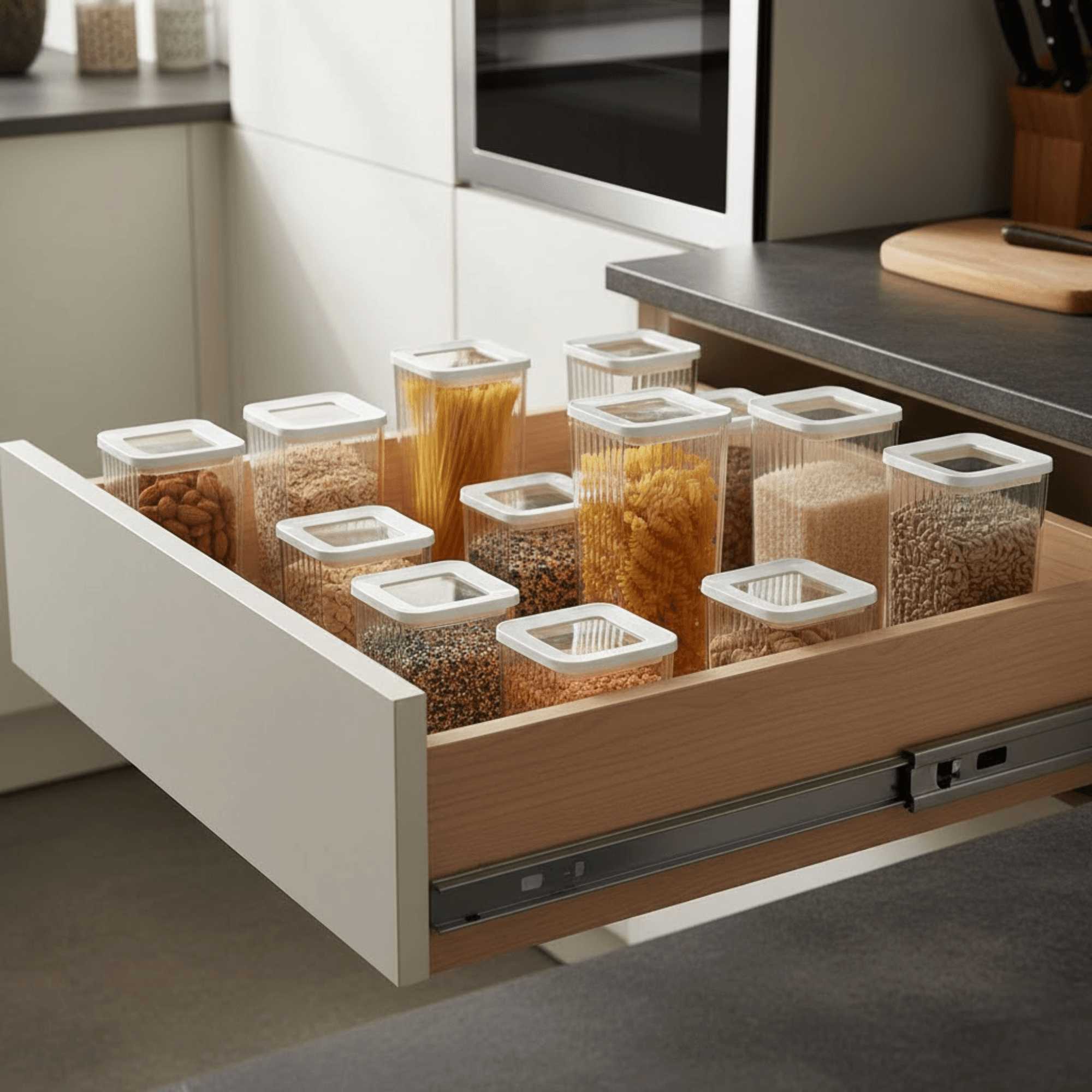
For storing less visually appealing bulk products, it is worth using deep drawers. Stacking containers in such drawers maximizes space "upward," and square containers can hold up to 25% more products than traditional round jars.
Most frequently used products like salt, coffee, breakfast cereals, should be kept at hand. The principle of "what you see, you can easily reach" helps avoid rummaging in cabinets and speeds up daily meal preparation.
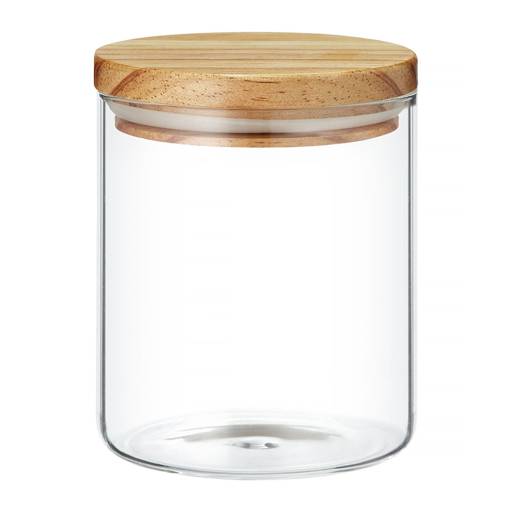
Application: open shelves, kitchen countertops, kitchens in Scandinavian or rustic style.
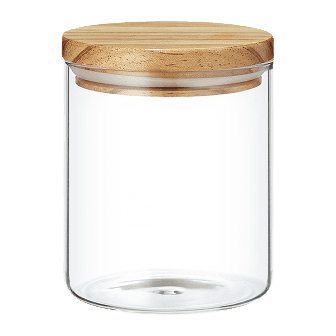
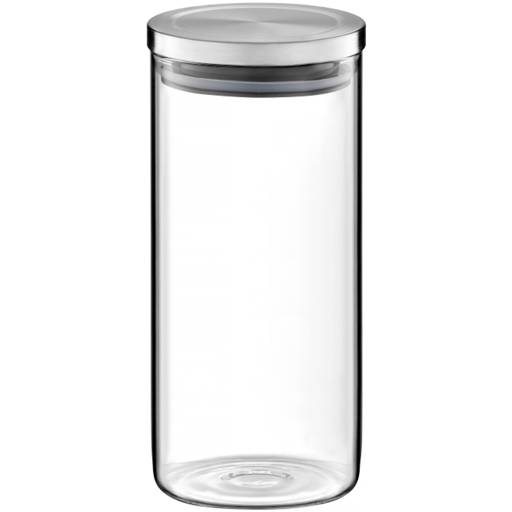
Why choose? The perfect combination of hygienic glass with a natural lid allows you to store products that please the eye such as spaghetti pasta, coffee beans, colorful muesli, or dried fruits. Slim glass containers are stain-resistant and easy to keep clean.
Application: cabinets, cargo-type drawers, pantry shelves.
Why choose? The square cross-section and modularity allow containers to be stacked on top of each other, saving space. Optimo is available in two colors that can be combined, e.g., gray for groats, green for baking additives, making sorting and quick access to products easier. The material is lightweight, yet durable and food-safe (BPA Free).
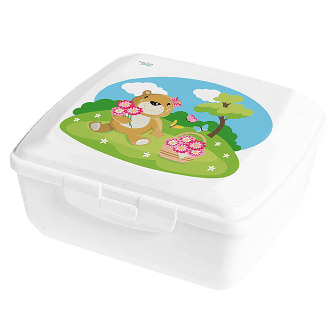
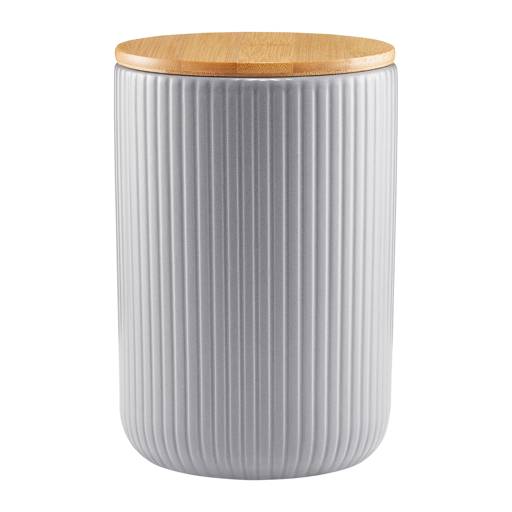
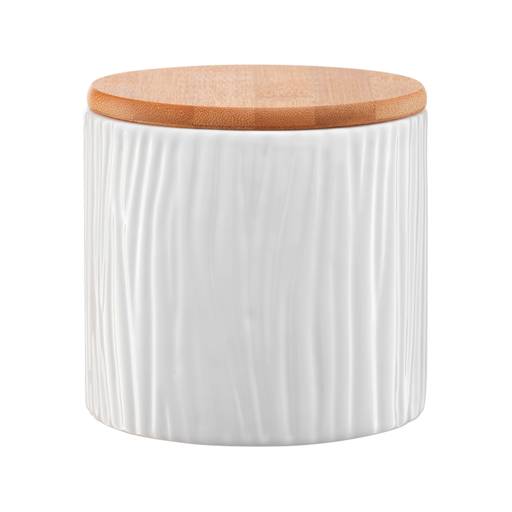
Application: loose products, e.g., used by children, such as breakfast cereals or snacks.
Why choose? Curly containers are lightweight, durable, with an ergonomic and elegant shape. Perfect for quickly pouring portions and easy gripping. They work well in homes where speed and convenience are important.
Take everything out of the cabinet, wipe the shelves, and remove dust. It's the simplest way to start with a clean base.
Remove unnecessary boxes and bags. Pour products into Ambition containers and mark the expiration date using a label or a chalk marker on the container.
Create sections for 'breakfast' (cereal, muesli, coffee), 'lunch' (grains, pasta), and 'baking' (sugar, dried fruits, flour). This way, everything is within reach and it's easier to maintain order daily.
Why use labels on containers?
Labels on containers allow for quick identification of contents and expiration dates, making kitchen organization easier and helping to reduce food waste.
Can dry products spoil?
Yes, mainly due to moisture and pests. Sealed containers prevent this problem, extending product durability by several months.
Are glass containers better than those made of plastic?
Glass does not absorb odors or dyes, making it ideal for display on shelves and countertops. Plastic is lighter, child-safe, and easy to use daily, especially in drawers or when quickly grabbing snacks. Which material is better actually depends on your needs.
How to store flour to prevent pantry moths?
To prevent pantry moths from being attracted to flour, it should be stored exclusively in a sealed, closed container after transferring from the store package.