Plant motifs, subtle colors, and accessories drawn from nature can completely transform the character of your table. We share tips on how to use botanical tableware, pair it with glassware, textiles, and decorations, and create an arrangement perfect both for everyday use and gatherings with loved ones.
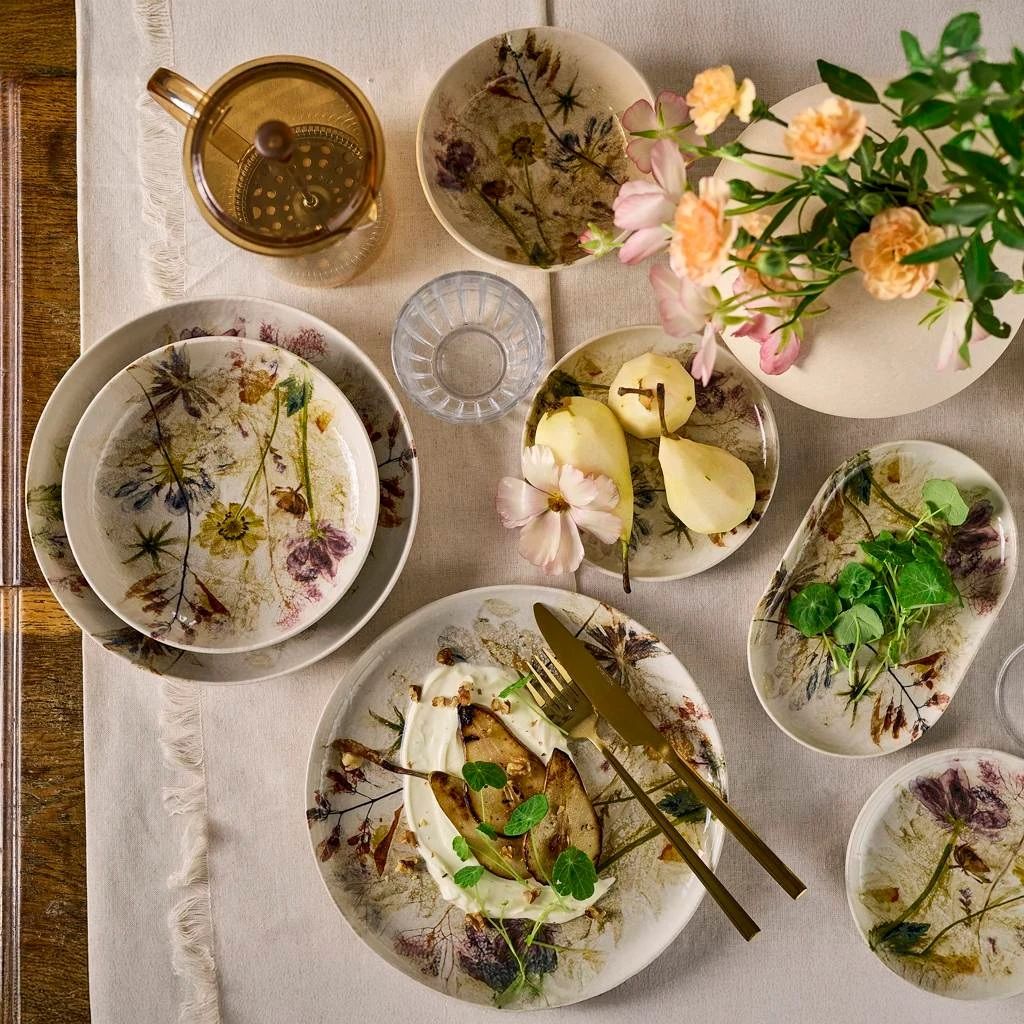
Nature has long inspired interior designers, and today it is also appearing ever more boldly on our tables. Leaf motifs, delicate shades of green, warm earth tones, and organic forms allow you to create a setting that is decorative without feeling overly formal. Such a table looks great during a gathering with loved ones, while easily accompanying us every day. Nature-inspired tableware offers great freedom in composing a table setting. It does not need many decorations, as it can itself become one of the most important elements of the arrangement. Just a few well-chosen accessories are enough to create a table full of lightness, color, and botanical character.
Plant patterns have the advantage of being hard to attribute to just one season. In spring, they can be paired with fresh flowers and light textiles; in summer, with colorful glass; in autumn, with wood and warm colors; and in winter, used as a green accent to liven up a more muted setting. Therefore, nature-inspired tableware can serve as the foundation of your arrangement all year round. Instead of replacing dishes with the change of seasons, it is enough to change their surroundings: the tablecloth, napkins, glassware, or the centerpiece on the table. Botanical design also fits well into a more relaxed approach to table setting. Not everything has to be perfectly symmetrical and kept in a single color. Leaves, irregular compositions, and various shades of green introduce a sense of naturalness, making the arrangement less formal and more inviting.
If the plates are patterned, it is worth letting them play the main role. A richly decorated table setting does not need a large number of additional elements; often moderation produces the best effect. A good example is the Herba Ambition collection, whose design is based on subtle plant motifs and delicate, natural colors. The dinner set includes dinner plates, deep plates, and dessert plates, allowing the botanical motif to appear consistently throughout the entire meal. The dishes are made of ceramics, and the manufacturer specifies that they are dishwasher safe and microwave safe. This is especially important when we want striking tableware not to be reserved exclusively for special occasions. A decorative plate can just as easily appear during Sunday dinner, a quick lunch, or evening supper.
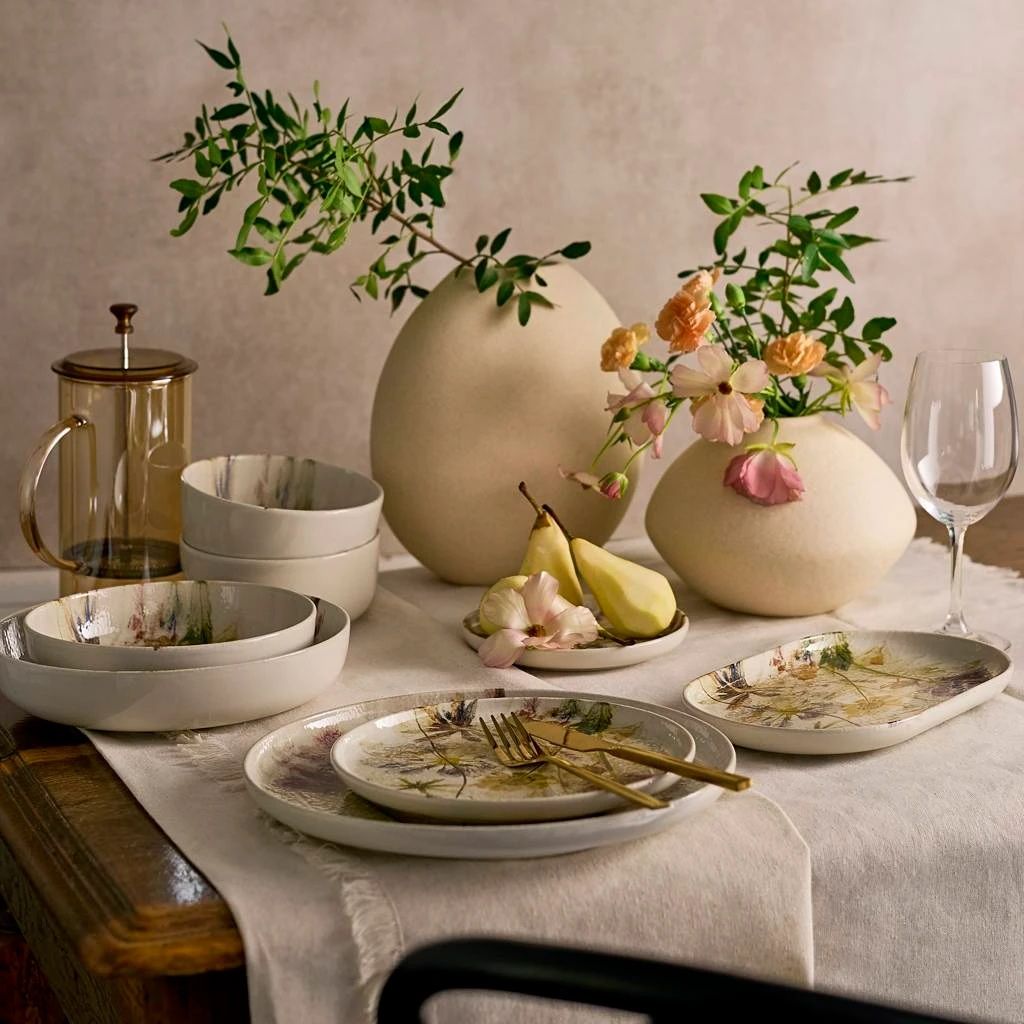
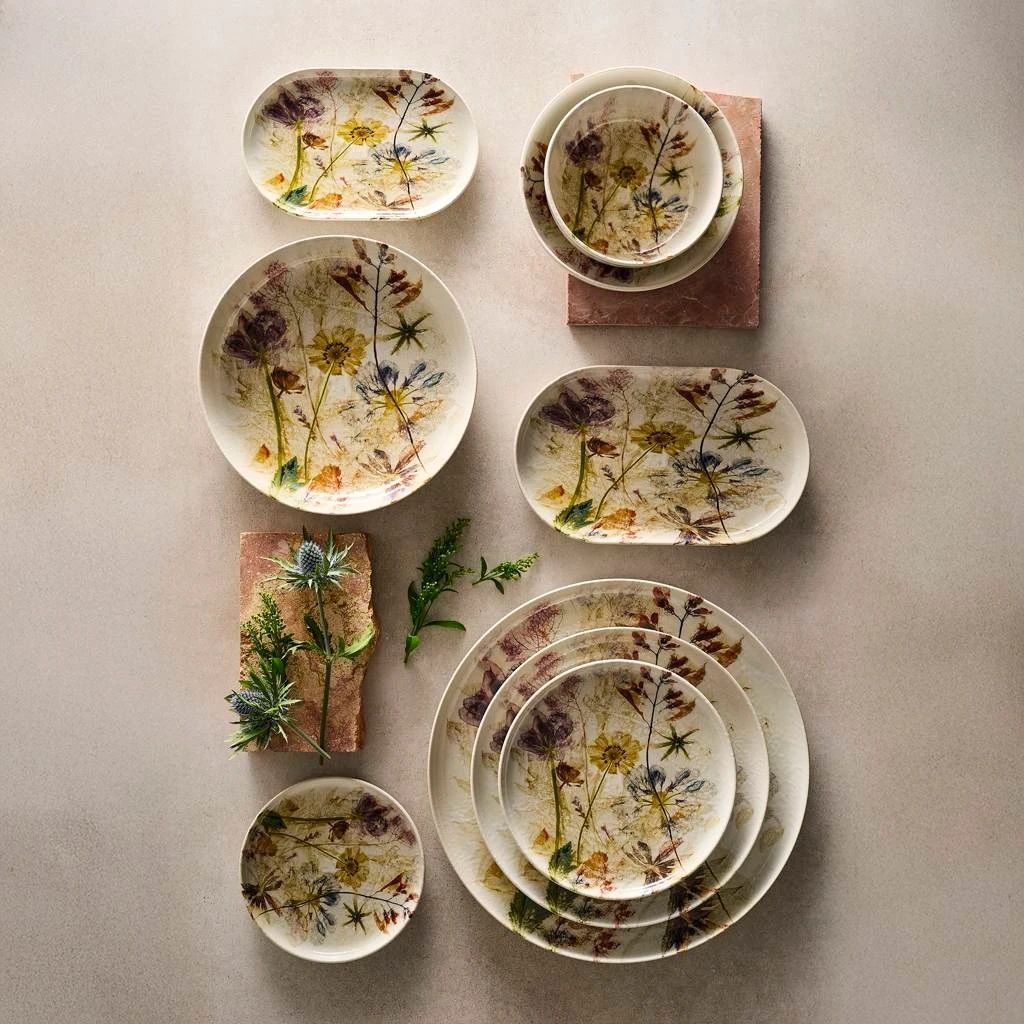
The easiest way to create a cohesive arrangement is to draw colors directly from the tableware pattern. Green can be combined with beige, écru, off-white, gray, and various shades of wood. This keeps the table visually calm, even if there is a distinct motif on the plates. However, this does not mean that a botanical table must be kept exclusively in a neutral palette. If you want to achieve a more energetic effect, you can add accents of yellow, terracotta, pink, or deep burgundy. It is important that one or two colors repeat in different places: on the tableware, napkins, flowers, or glassware. With more decorative ceramics, the principle of contrast works well. If the pattern on the plates catches the eye, the tablecloth can remain plain. If, on the other hand, the table is made of striking wood, it is worth skipping the tablecloth entirely and letting the natural texture of the tabletop become part of the arrangement.
A nature-inspired style is not just about color and pattern. Materials are equally important. Linen, cotton, wood, glass, or braids introduce diverse textures and make the place setting look more multidimensional. A linen or cotton napkin can replace a more formal plate decoration. A wooden board placed in the middle of the table works great for serving bread or snacks, while simple glasses and stemware help maintain visual lightness. With plant-patterned tableware, combining decorative elements with very simple ones works particularly well. This ensures that the pattern does not compete with other accessories, but instead becomes the starting point for the entire composition.
The natural character of the table is easiest to emphasize with elements that actually come from nature. However, there is no need to create an elaborate bouquet. A few twigs placed in small vases, fresh herbs, or single flowers often look more contemporary than a tall composition occupying the center of the table. Such decorations have another advantage: they do not obstruct the view of people sitting opposite each other. The table remains primarily a gathering place, and the ornaments frame the meal rather than dominate it. It is also a good idea to match the decoration to what is on the plates. For a summer lunch, these can be herbs; for an autumn dinner, twigs with small fruits; and for a weekend breakfast, a few fresh flowers arranged in a small vessel.
One of the most interesting ways to arrange a botanical table is the conscious mixing of different elements. A dinner set can form the base, but platters, salad bowls, or cake stands do not have to look identical. In the Herba line, in addition to a complete dinner set, serving platters, salad bowls, and cake stands with botanical motifs are also available. This allows you to expand the setting depending on your needs and the way dishes are served. You can also pair patterned elements with simple, solid-color ceramics. A plate with a botanical motif next to a plain bowl or a minimalist cup will be more prominent, and the whole arrangement will gain a slightly eclectic, less catalog-like feel.
A beautiful table setting doesn't have to mean a formal dinner. Dinnerware with a botanical pattern can transform the character of even the simplest meal, such as morning oatmeal, pasta prepared after work, or a slice of cake served with coffee. This is where tableware that combines decorative charm with everyday functionality works best. Herba was designed with both daily meals and gatherings with guests in mind, while the option to use the dishes in the microwave and wash them in the dishwasher makes using them every day effortless. You also don't need to set a full table every single time. Sometimes all it takes is a patterned plate, a glass, a linen napkin, and a small sprig in a vase. It is a simple way to give an ordinary meal a more thoughtful touch.
For a special occasion, it's worth expanding the same foundation instead of completely changing the style. You can add a fabric table runner, stemware, candles, and serving dishes for sharing food to the botanical dinnerware set. The Herba service for six includes six dinner plates, soup plates, and dessert plates each, allowing you to maintain a consistent theme throughout successive courses. You can complement it with serving platters or salad bowls featuring the same botanical pattern or, conversely, introduce simpler dishes to balance the decorative nature of the plates. It is worth remembering that a natural arrangement shouldn't look too rigid. A slightly casual napkin placement, an irregular floral composition, or varied glassware can make the table feel more welcoming and relaxed.
The popularity of botanical motifs is easy to understand—they are decorative yet timeless. They allow you to create an arrangement that can change with the seasons, the occasion, and your own mood. Nature-inspired tableware can serve as a starting point for both a minimalist setting in neutral colors and a bolder table full of flowers and colorful accessories. The Herba collection shows that botanical design can also find its place in the everyday dining room, combining decorative character with practical use. You don't need many elements to achieve the desired effect. Sometimes, a botanical pattern on the plates, a few natural textures, and a touch of greenery are all it takes to bring a calmer, more relaxed, and closer-to-nature atmosphere to the table.