It is hard to imagine Easter gatherings at the table without a carefully selected menu. It is the dishes that create the holiday atmosphere and make shared moments with family even more special. When planning the Easter table, many people face the question: should they stick exclusively to traditional flavors or enrich them with something new and surprising? Here you will find inspirations that combine proven, classic recipes with practical culinary tips. We will show you how to bring out the full flavor of popular Easter dishes and how to give them freshness with small changes!
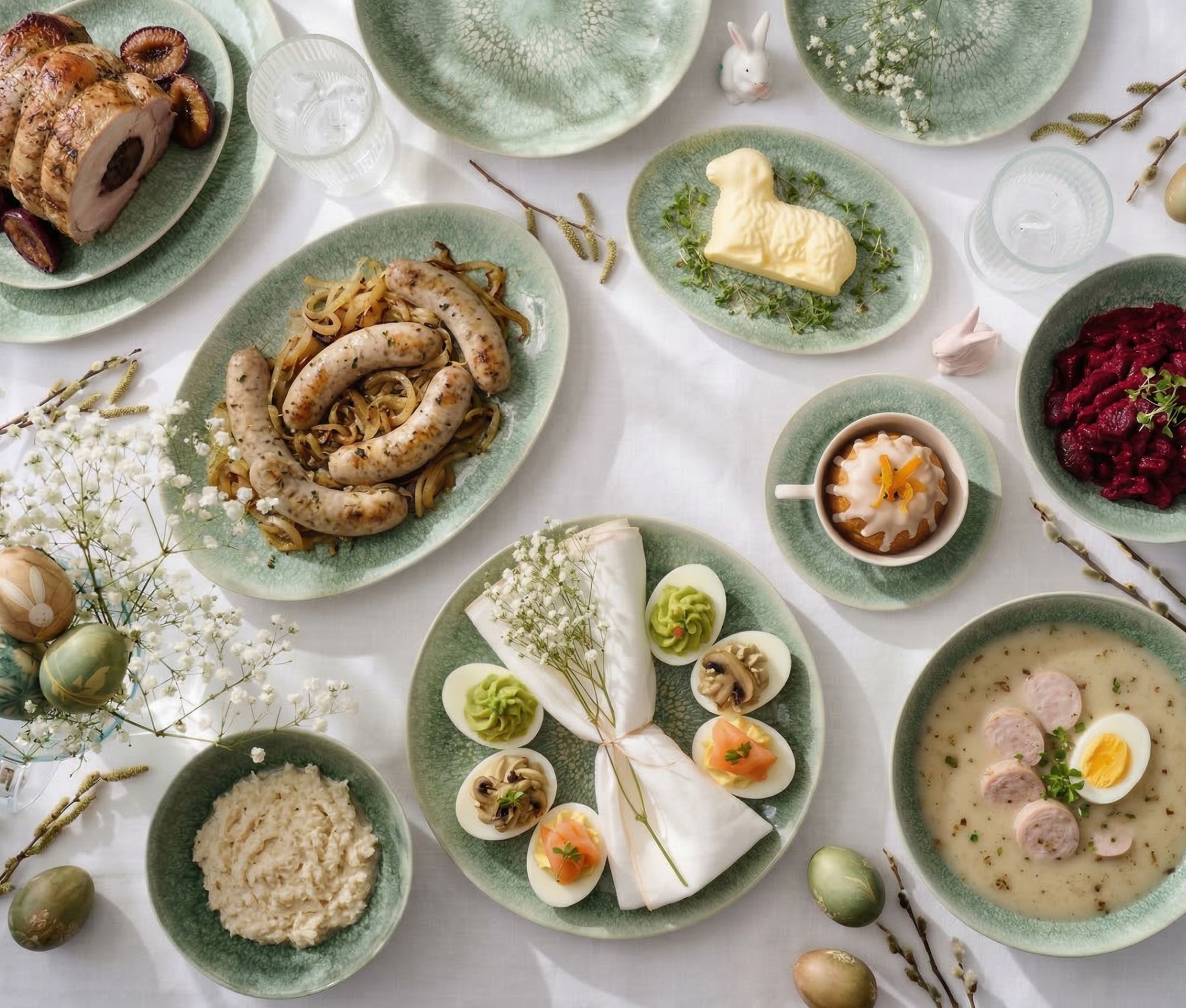
Polish Easter tradition is strongly based on the symbolism of rebirth and new life, which is also reflected in the dishes served during the holidays. The most recognizable ingredient is, of course, eggs, a symbol of the beginning and fertility. In the kitchen, they appear in many forms: from classic eggs with mayonnaise, through stuffed ones, to an ingredient in salads or sandwich spreads. A standard size L chicken egg weighs an average of about 65 grams and is a valuable source of protein, which is why it works great as a base for filling appetizers.
The second inseparable element of the Easter menu is white sausage. In a high-quality product, after scalding, the meat takes on a light gray color, which usually indicates the absence of nitrite preservatives. Traditional white sausage contains about 20–25% fat, thanks to which it remains juicy both after baking and when cooked in soup. However, for the festive table to be complete, it is also worth taking care of a few classic additions:
The secret of a real, aromatic sour rye soup is a well-prepared sourdough starter made of rye flour, most often type 2000. It should ferment at room temperature for about five days, only then does it acquire its characteristic acidity and deep aroma. Traditional Old Polish sour rye soup is distinguished by a distinct, slightly sour taste and the aroma of garlic and marjoram. During cooking, an important step is the proper tempering of the cream, i.e., mixing a small amount of hot soup with the cream, and only then pouring everything into the pot. This will prevent it from curdling.
The consistency of the soup can be easily adjusted by the amount of sourdough starter added. Before pouring it into the pot, it is worth mixing it thoroughly, as it naturally separates during fermentation. Thanks to this, the sour rye soup will have a uniform taste and appropriate thickness.
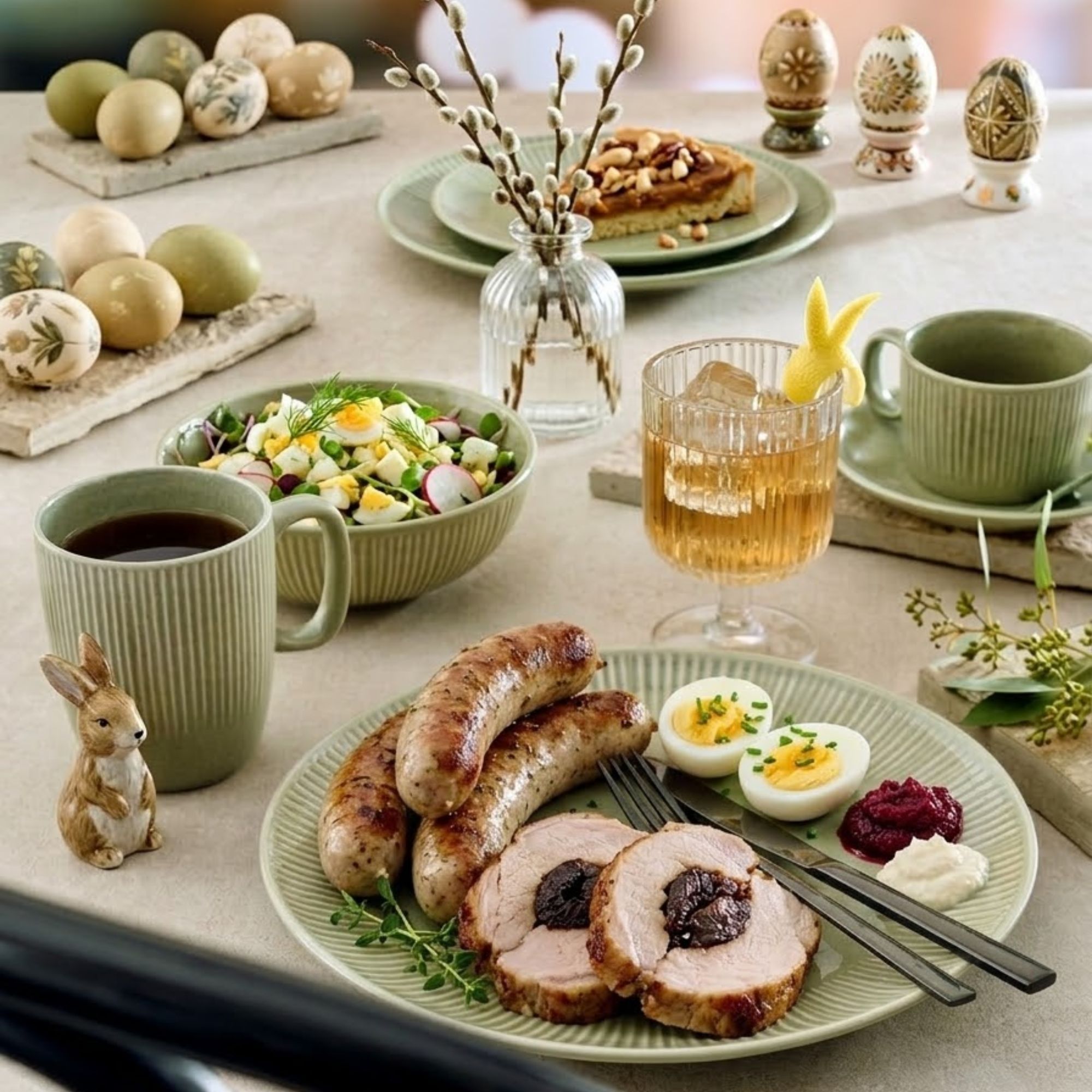
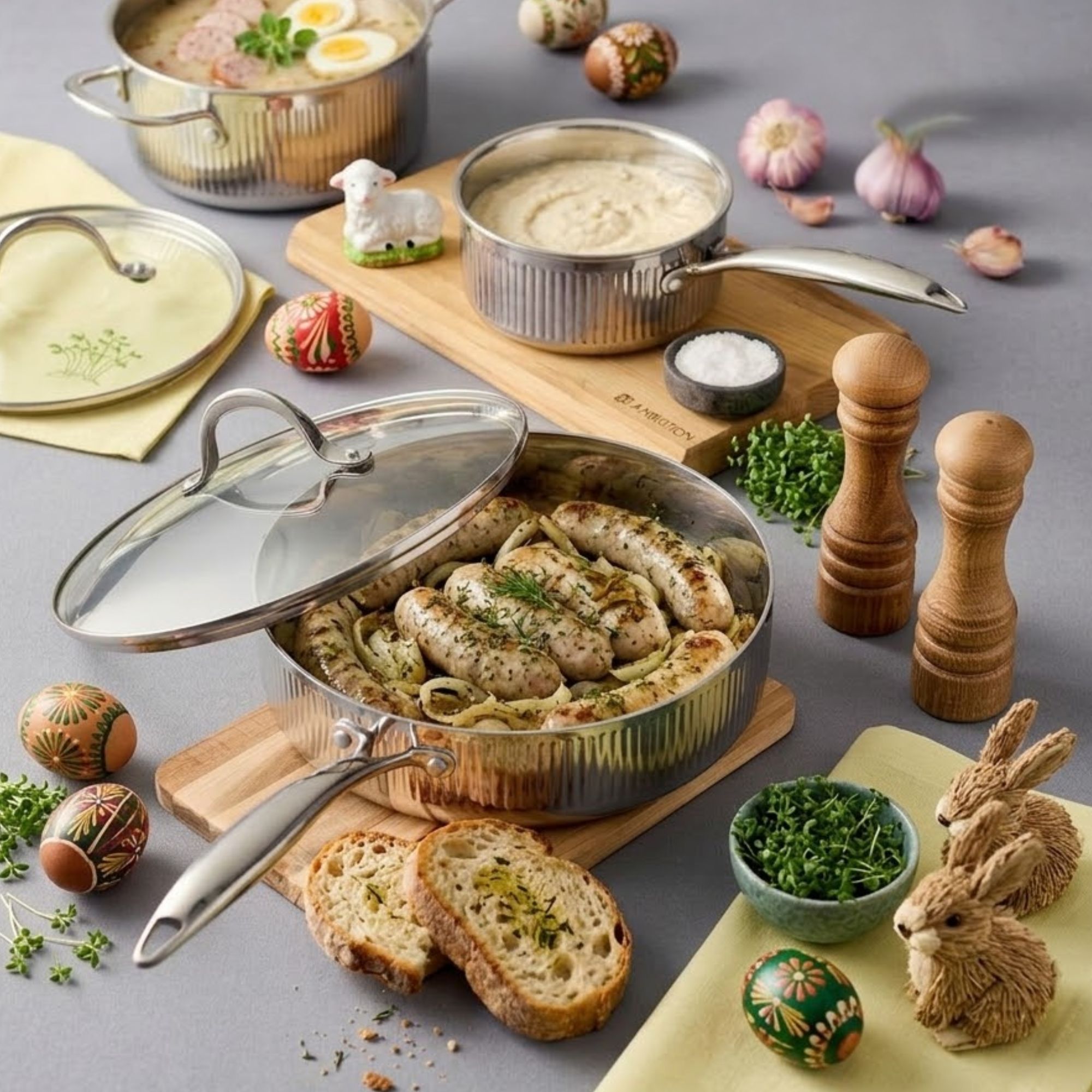
A properly composed menu allows for a natural transition from a light, festive breakfast to a more formal dinner. In Polish homes, dishes that combine traditional flavors with a homemade character invariably reign supreme. Among the most frequently prepared dishes are:
The centerpiece of an Easter dinner is usually roasted meat. One of the most popular choices remains pork loin. To achieve an exceptionally juicy result, it is worth roasting it at a lower temperature, around 120°C. This preparation method helps maintain the meat's moisture, which can be more difficult with standard roasting at 180°C. Using a culinary thermometer is also a good solution. For pork, the optimal internal temperature is about 68°C. This keeps the meat tender and delicate. An even better result can be achieved if you marinate it beforehand for about 12 hours in a brine with a concentration of about 6%.
Roasted ham with a layer of fat also works great on the Easter table. During roasting, the fat gradually melts, giving the meat a deeper flavor and aroma. A glaze prepared from linden honey and hot mustard is a perfect complement, creating an appetizing, slightly crispy crust on the surface of the meat. After removing it from the oven, it is worth letting the ham rest for about 15 minutes before starting to slice it. This short rest allows the juices to distribute evenly throughout the meat, ensuring every slice remains juicy and full of flavor.
What to make for Easter dinner?
The best choice for Easter dinner will be a juicy roast, such as pork loin with plum or ham in a honey glaze, served with homemade potato dumplings and spring vegetables with horseradish.
What hot dishes for Easter?
For a hot Easter meal, it is worth serving traditional żurek on homemade sourdough with white sausage or a tender veal roast served in an aromatic gravy.
How to surprise guests at Easter?
Surprise your guests with a modern version of the classics by serving eggs marinated in beet sourdough for an intense color or roasted pork belly confit in aromatic herbs and honey.
Which Easter dishes can be prepared in advance?
Most labor-intensive dishes, such as aromatic żurek on sourdough, homemade pâtés, meats for roasting in brine, and cakes like mazurek, can be successfully prepared even two or three days before the holidays.
When is the best time to cook żurek for Easter?
The soup is best prepared a day in advance so that all the flavors and aromas of the spices have time to blend thoroughly.
What meat is best for an Easter roast?
The most traditional and elegant choice will be pork loin on the bone or a ham roasted whole in aromatic herbs.
How long to boil hard-boiled eggs for the Easter basket?
Size L eggs should be boiled for exactly 9 minutes from the moment the water boils, so that the yolk is set but not dry.
How to prevent white sausage from bursting during poaching?
The sausage should be placed in hot but not boiling water and the temperature should be maintained at about 80 degrees for 15 minutes.